Simple Chinese Art to Drawn by an Artist Asian Art Museum
Asia has probably produced some of the biggest talents when it comes to contemporary art.
Cai Guo-Qiang, Pacita Abad, Tiffany Chung and Ai Weiwei are some of the famous names who have used this art form — which emerged in the late 20th century — to bring focus to the problems of our times ranging from personal matters such as isolation to socio-political causes such as migration.
From everyday things like pins, chairs, tables and even fireworks, to videos and paintings, these artists use common objects equally a course of expression. In fact, Ai'south contempo 2020 documentary Coronation made headlines for bringing to lite the harrowing realities of the coronavirus situation in Wuhan.
In the last few decades, Asian contemporary artists accept not simply introduced unique styles to art but also helped trigger important debates on pressing issues. In the process, they have too won prestigious honours and awards, along with showcasing their work in various art galleries and museums.
Here's a look at 10 of the most famous Asian contemporary artists of all time that yous should know nearly.
Ai Weiwei, China
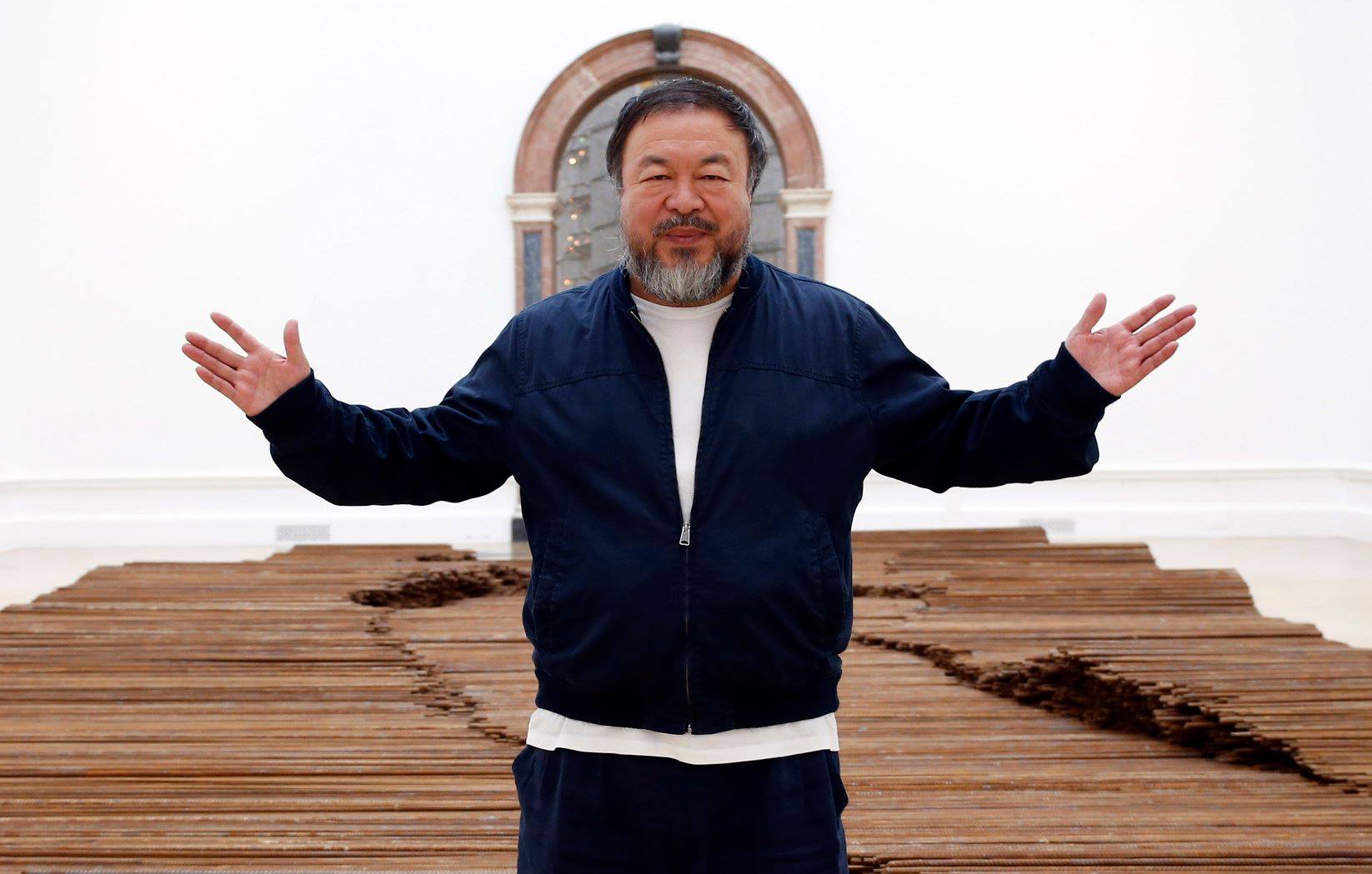
1 of Mainland china'south nigh famous contemporary artists, Ai Weiwei is not simply known for his art but as well his strong political opinions. He has openly criticised the Chinese authorities and has faced consequences many times. He was briefly placed under firm arrest in 2010 for voicing his anger confronting authorities corruption that led to the deaths of thousands of schoolchildren in the 2008 Sichuan convulsion. In 2011, he was held in custody for three months before being released nether government surveillance and travel restrictions. In 2015, he moved to Berlin after receiving his passport from the authorities, and then to England in 2019 where he currently resides.
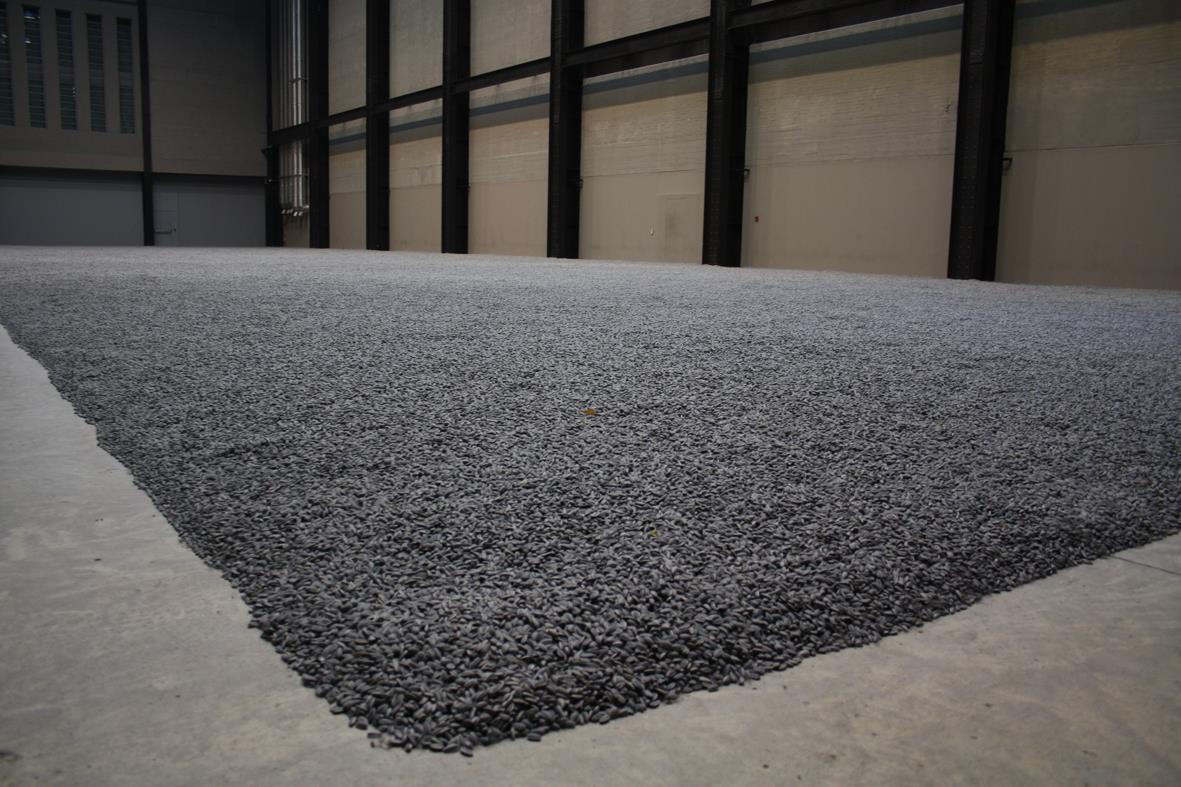
Some of Ai's famous works include Sunflower Seeds (second picture show) and Circle of Animals/Zodiac Heads. The former is an installation created using millions of individually handcrafted porcelain sunflower seeds, weighing approximately ten tonnes and spread like a bed in a room. Circle of Animals/Zodiac Heads is a series of sculptures representing the twelve Chinese zodiac signs inspired past an 18th-century fountain-clock.
Also interested in architecture, Ai started his ain firm FAKE design in 2003. He has besides collaborated with other architectural firms on projects similar the Beijing National Stadium, famously known equally 'Bird's Nest,' and London'south Serpentine Gallery Pavillion.
Yayoi Kusama, Japan
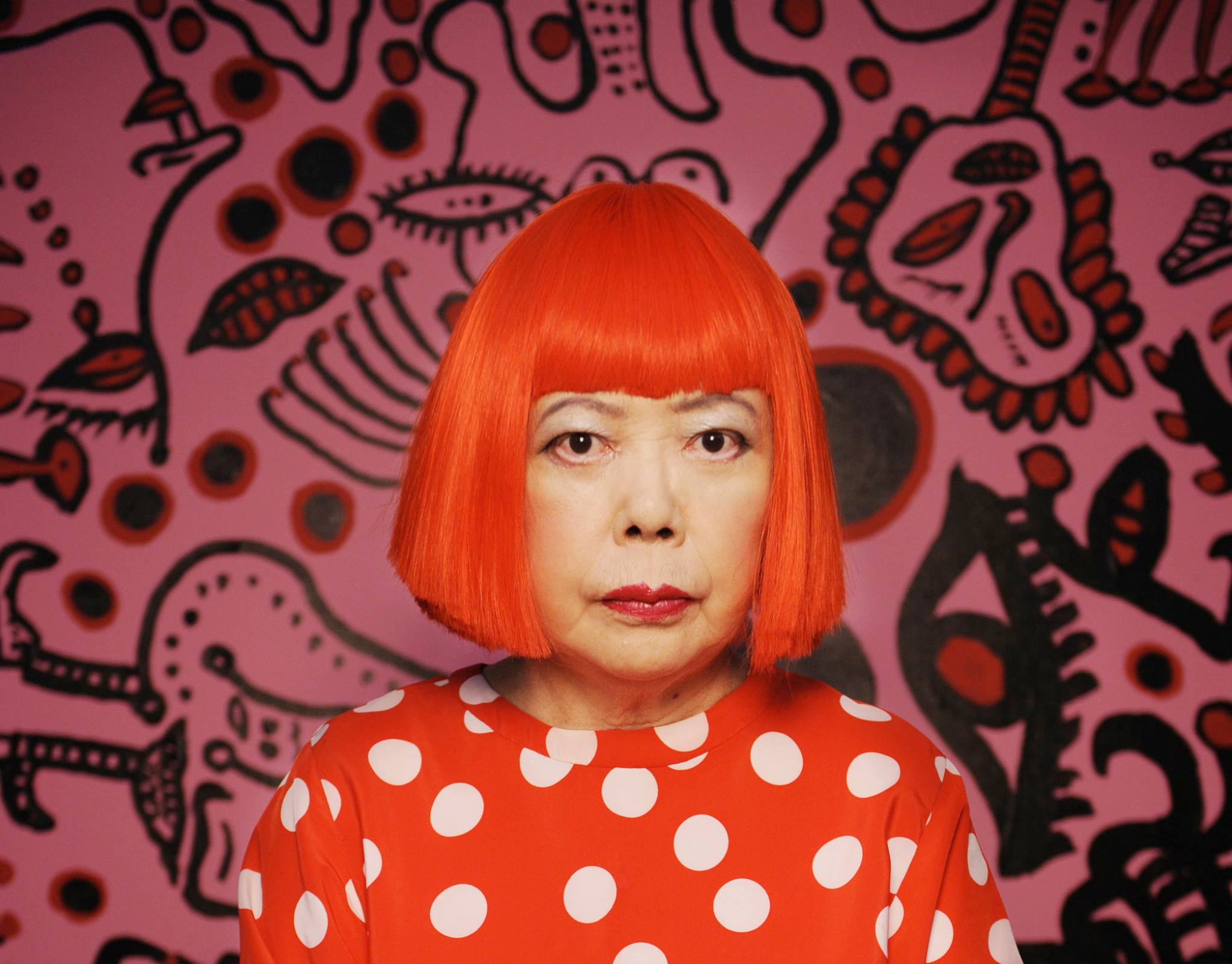
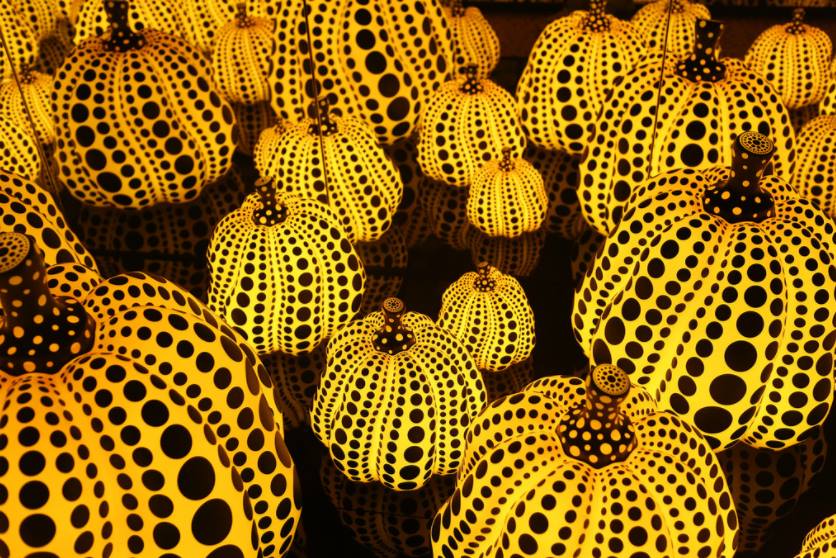
Considered past many as one of the nearly influential Asian gimmicky artists to have emerged from Nippon, 91-twelvemonth-old Yayoi Kusama is renowned for using polka dots equally a motif. Her artwork highlights themes such as anti-war, patriarchy and anti-commercialism. She was one of the most sought-later artists in the gimmicky art scene in the West during her stay in the US in the 1960s.
Post-obit a decline in health, she moved dorsum to Nippon in 1973 and stayed out of the public centre. In 1993, she made her comeback at the 45th Venice Biennale with the acclaimed Infinity Mirror Rooms exhibition — an installation using mirrors to create an impression of intense repetition. She has besides collaborated with fashion brands like Louis Vuitton, Marc Jacobs and Lancôme and authored books such every bit Manhattan Suicide Addict (1978) and her autobiography Infinity Net (2003).
Takashi Murakami, Japan
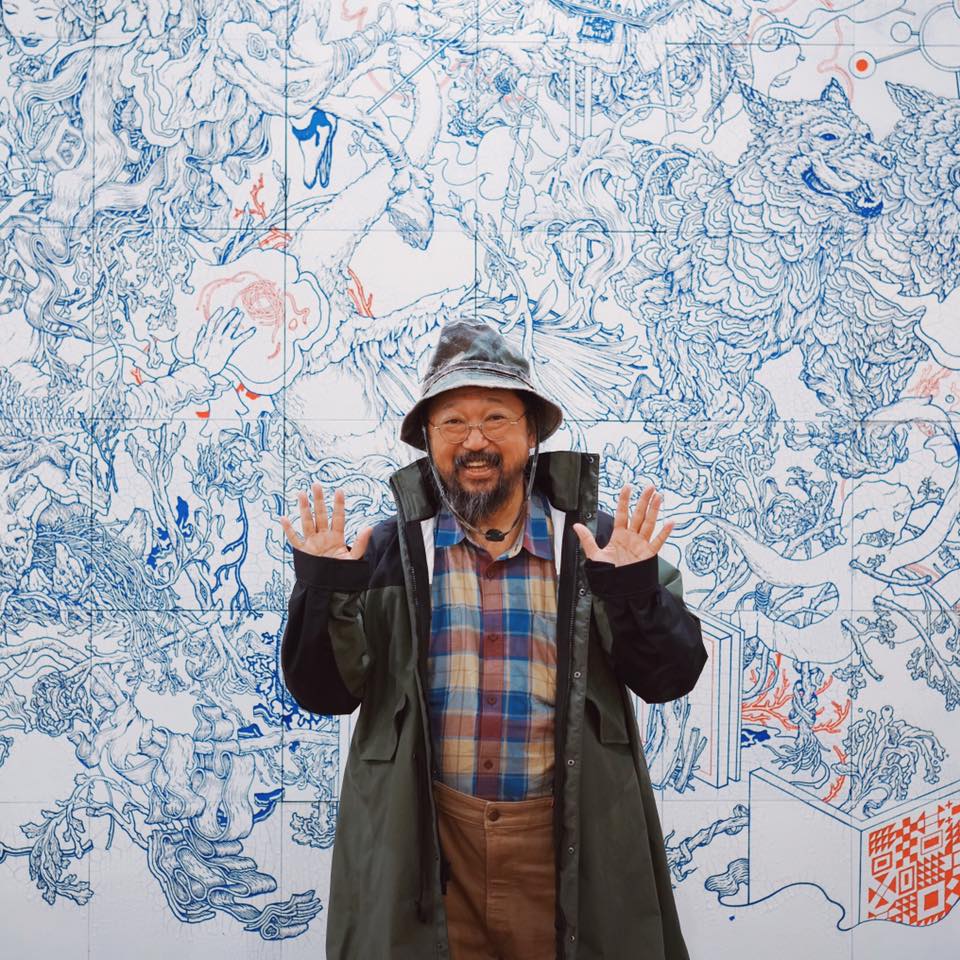
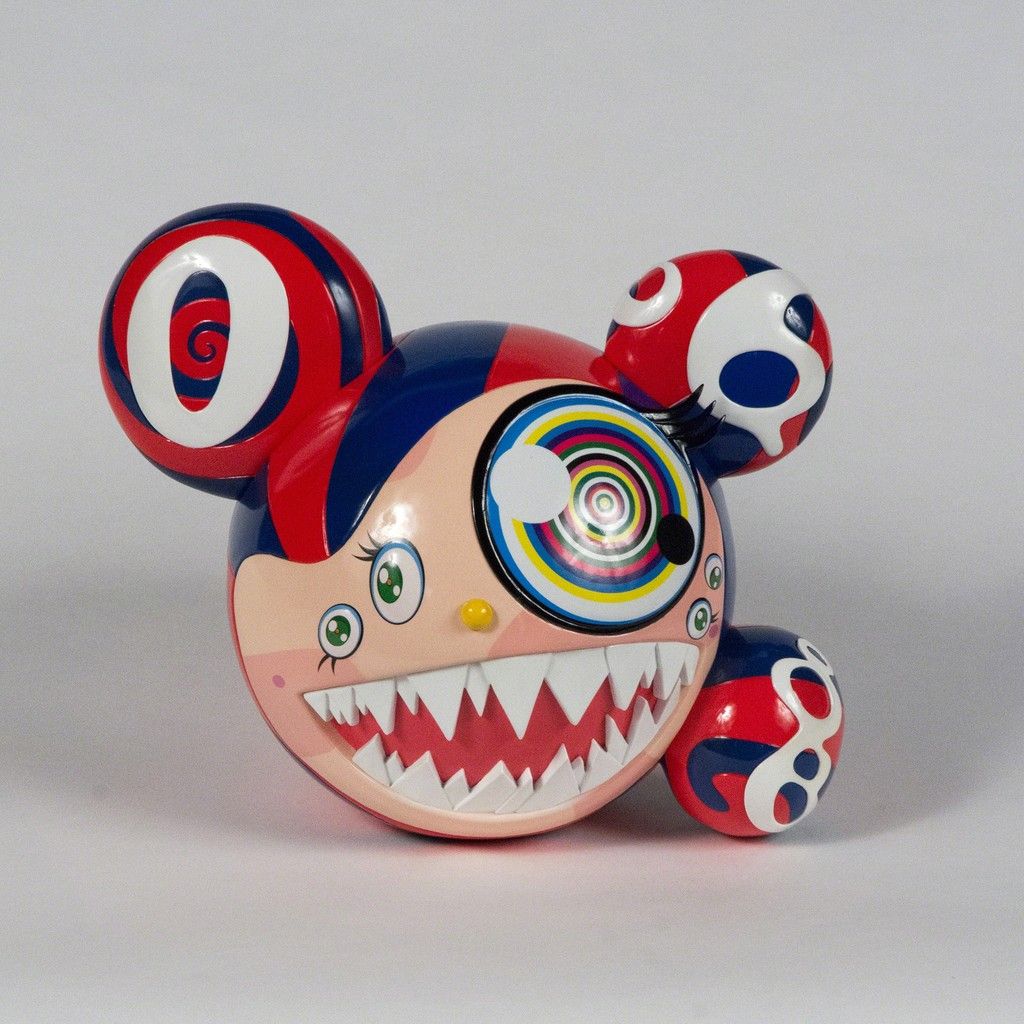
In the contemporary fine art scene, Murakami is famous for his Superflat post-modernistic art movement — a style that aligns historical Japanese art forms with contemporary pop culture. His art has largely been influenced by Japan's otaku culture, a display of obsessive interest in anime and manga. This was the inspiration for sculptures such equally Miss ko2 and My Lonesome Cowboy which was auctioned for U.s.$xv.2 one thousand thousand in 2008.
In the mid-1990s, he created Mr. DOB — a grapheme that is today a pop culture miracle. Named after the Japanese slang "dobojite" meaning "why?", Murakami created the abrupt-toothed character after studying the popularity of famous cartoon icons such equally Mickey Mouse, Doraemon and Sonic the Hedgehog.
Some of his works, such as the Polyrhythm and the atomic bomb themed Sea Breeze, reflect on his experiences of post-war United states of america-Japan relations. He has collaborated with many luxury fashion brands and artists including Louis Vuitton, Pharrell Williams and Kanye Due west. He besides wrote and directed the 2013 sci-fi film Jellyfish Eyes.
Christine Ay Tjoe, Indonesia
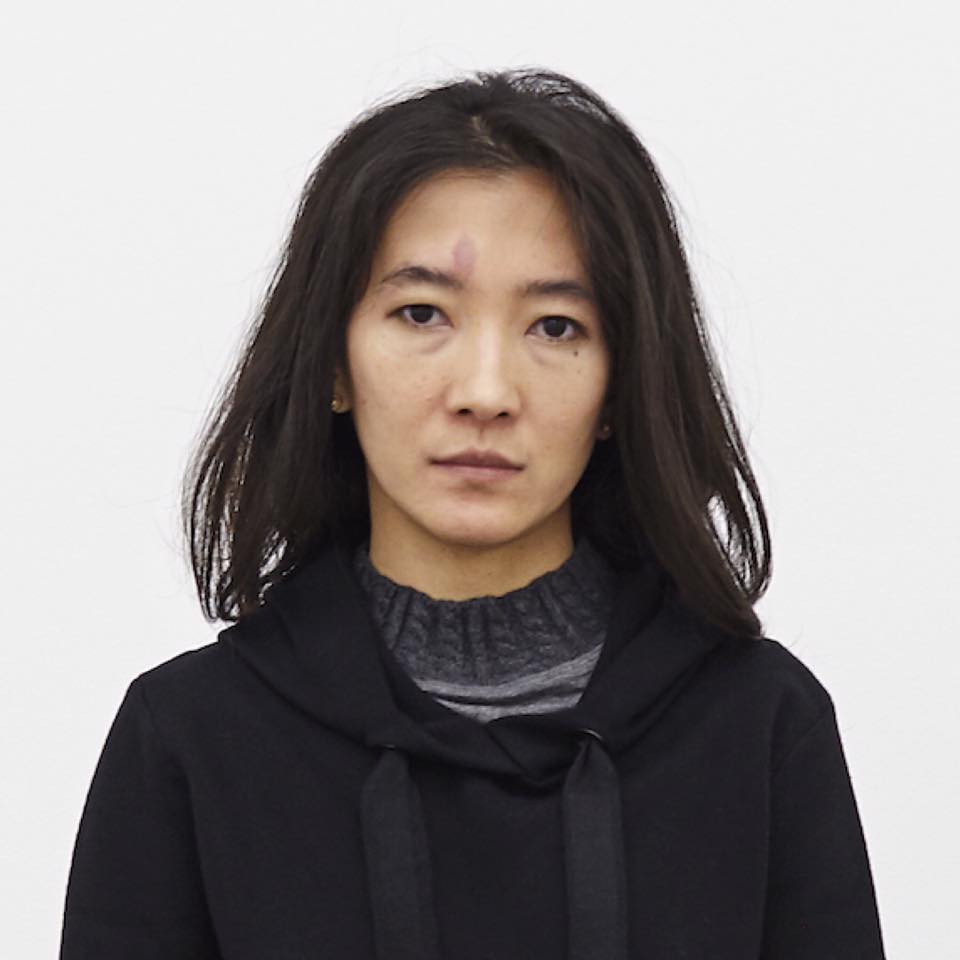
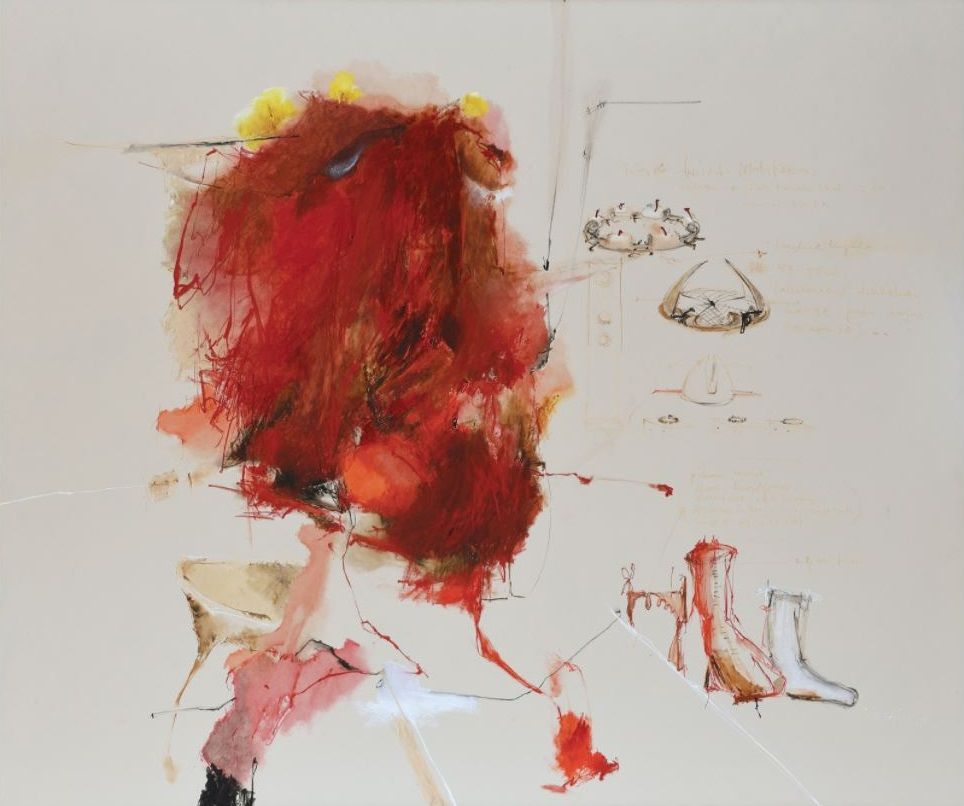
Born in West Coffee's Badung, Ay Tjoe is one of the about celebrated contemporary artists in her country. Early in her career, she explored a printmaking technique of the intaglio family unit known as drypoint before shifting to textiles. From intricately layered paintings on paper to encompassing sculptures, her art displays human emotions, her inner thoughts and other sensory experiences.
Her works take been showcased in Chiliad Palais in Paris, White Cube in London and the 21st Century Museum of Gimmicky Art in Kanagawa among other fine art galleries and museums. Ay Tjoe is as well one of the highest-grossing female Indonesian artists at global auction houses. In early 2018, her painting 3->ii #05 (second moving-picture show) sold at Christie'southward for US$318,500.
Haegue Yang, South Korea
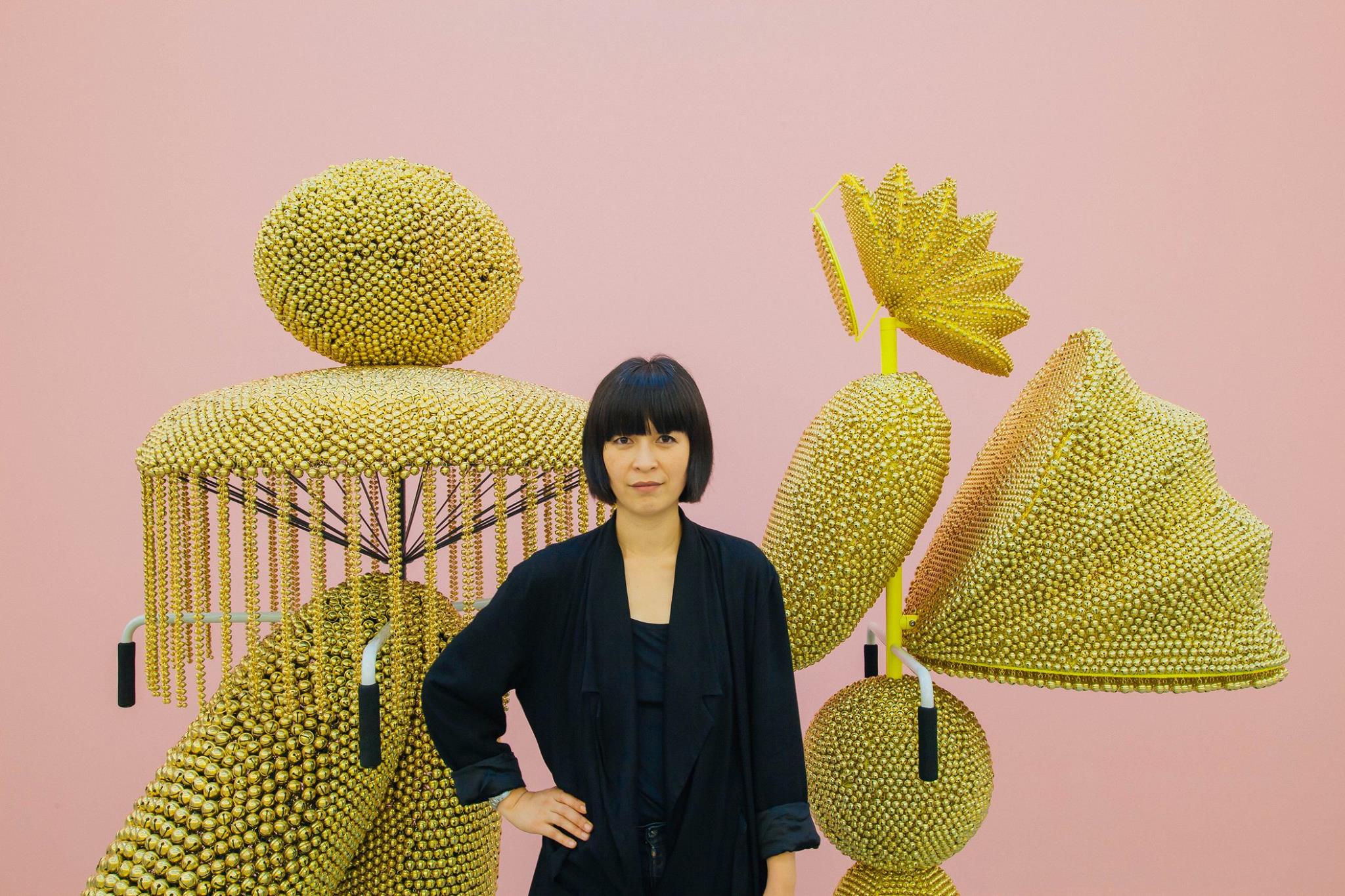
The first female Asian creative person to win the prestigious Wolfgang Hahn Prize and the honouree of the South korea Culture and Arts Accolade (Presidential Citation) in the visual arts category, Yang'due south work spans from classical sculpture to minimalism. She uses everyday objects to convey of import socio-political messages, raise questions on identity, and talk over the field of study of isolation. She is sensitive to and critically investigates the post-modern condition, gimmicky civilisations and themes such as limits.
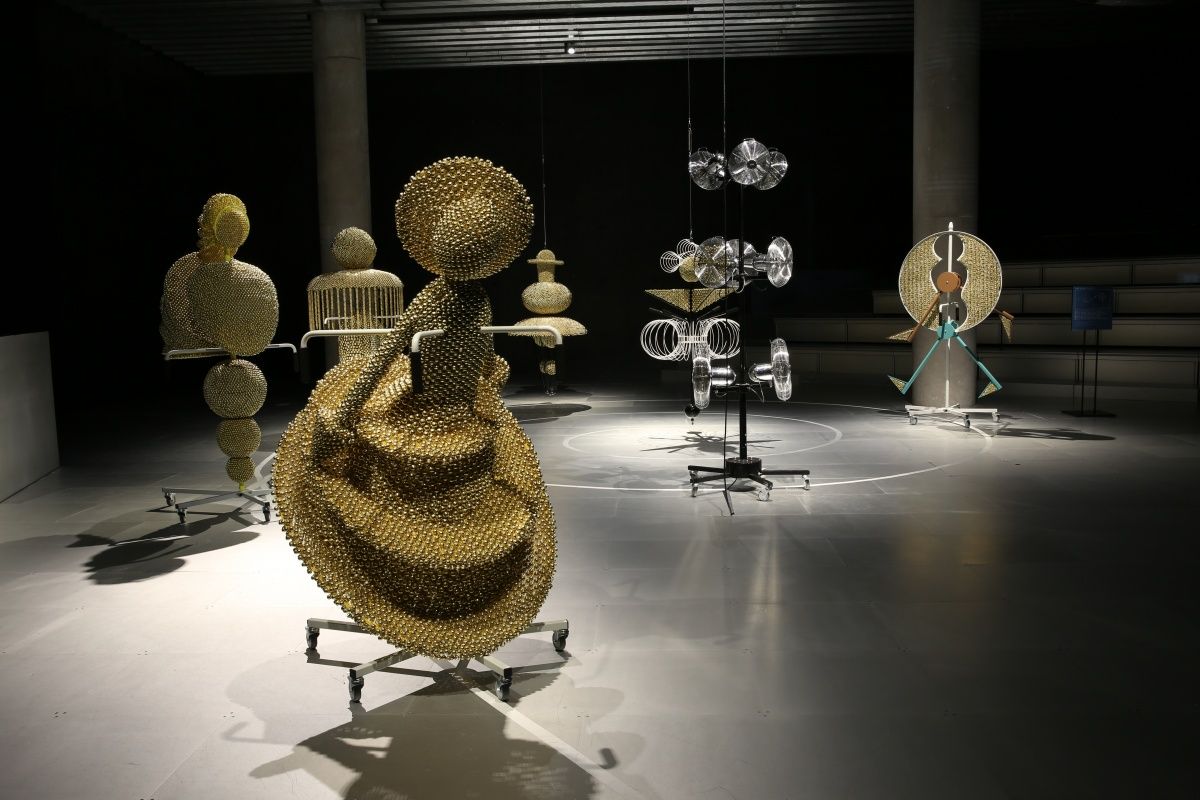
Yang's work has been featured at renowned events and places such as Munich'southward Haus der Kunst and Venice Biennale. Handles (second pic), her recent exhibit at The Museum of Modernistic Art in New York City, comprises geometrical sculptures covered with bells, industrial blueprint handles, vinyl patterns on walls and sounds of birds. The bells represent the ones used in Korean shamanistic rites. She is also a Professor of Fine Arts at her alma mater the Städelschule in Frankfurt and has previously taught at Sweden's Malmö Academy of Art.
Pacita Abad, Philippines-United states
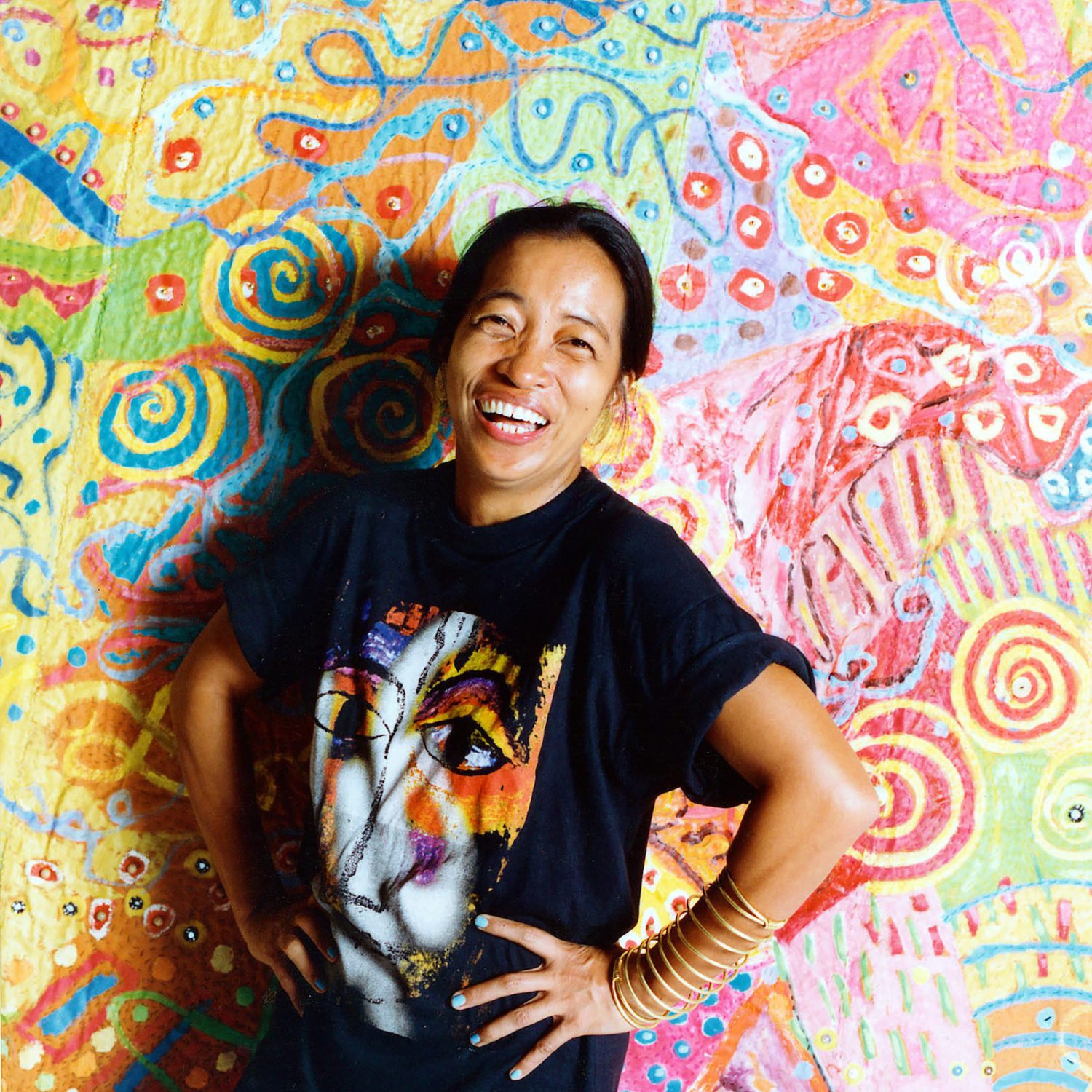
Abad, who in 1984 became the first woman to receive Philippines's ten Outstanding Young Men honor, influenced the world of art through her portrayal of marginalised women of colour. Her political activism forced her into exile to the US in 1970, where she began her career as an creative person. Her travel experiences shaped her artistic way, and she graduated from drawing tropical landscapes to producing abstract fine art.
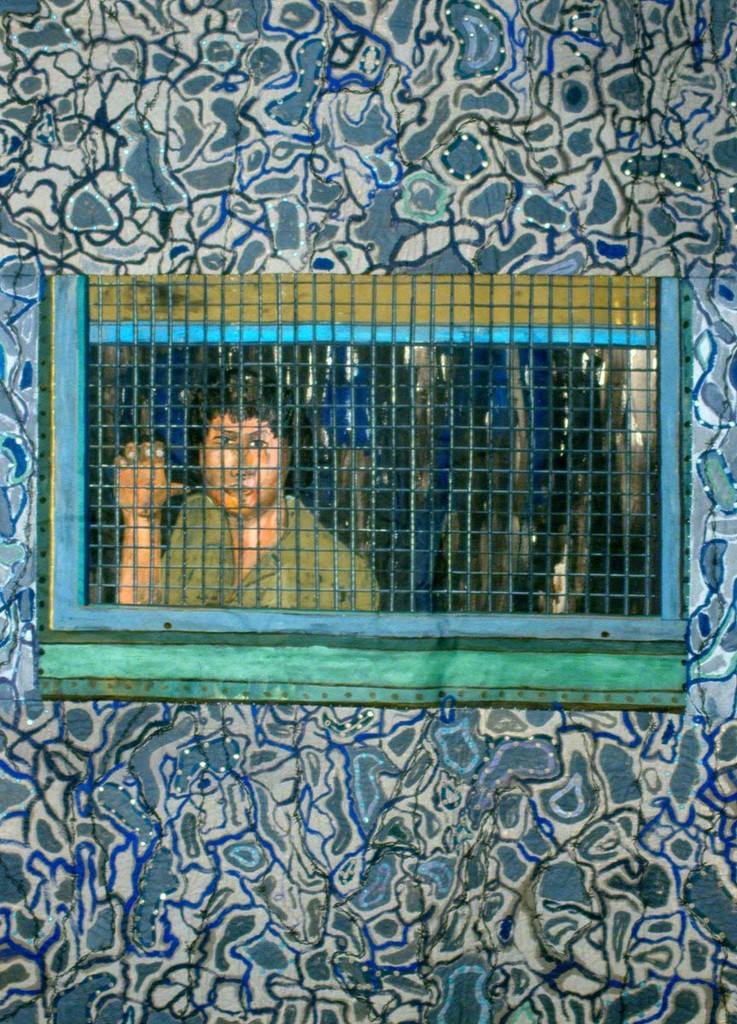
She is known for mastering a technique called trapunto, inspired by an Italian quilting method of stuffing different materials in the canvases to give an elevated consequence. Her famous 1991 artwork Caught at the Border (2d motion picture) — a powerful message on immigration — was created using this method. It shows a migrant peering from behind a prison house window and is embellished with mirrors reflecting the viewer's face.
Abad created over five,000 artworks, had more than 60 solo and over seventy grouping exhibitions at various museums and galleries till her decease in 2004. Her work is displayed in diverse art collections in over 70 countries.
Tiffany Chung, Vietnam-U.s.a.
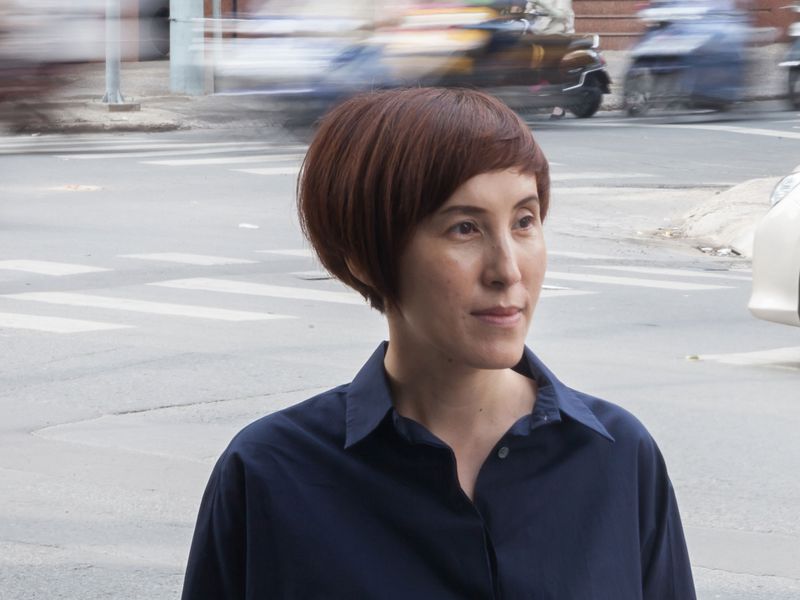
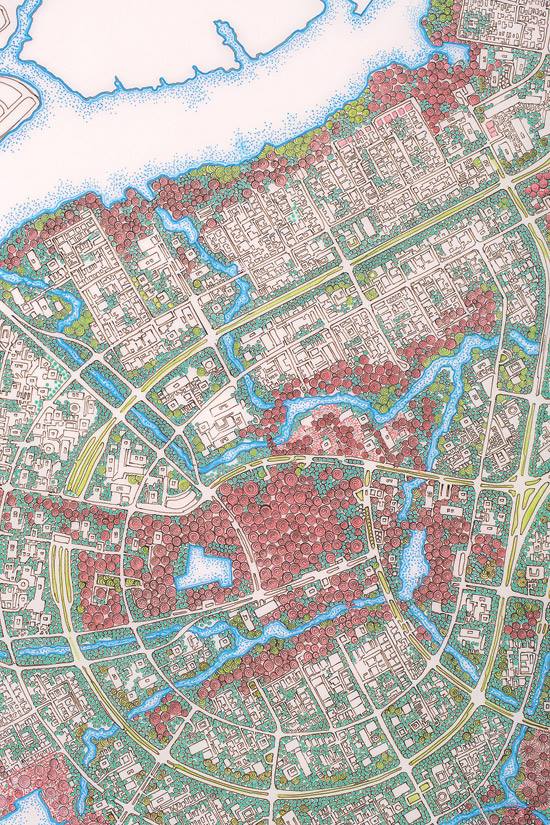
Known as ane of Vietnam's most renowned gimmicky artists, Chung depicts human being migration, conflict, displacement, urbanisation and human transformation through her art. She draws inspiration from her own life every bit a Vietnamese refugee in the US post-obit the Vietnam War.
A graduate and master of Fine Arts, Chung uses her knowledge of archaeology and cartography to create paintings in the class of meticulously drawn maps chronicling geological events and recent humanitarian crises. Her 2019 solo exhibition at the Smithsonian American Art Museum titled Vietnam, Past is Prologue — comprising paintings, maps and videos presenting the stories of Vietnamese refugees spread effectually the world — is just one of the examples. Her art has been exhibited at Venice Biennale, Johann Jacobs Museum in Zurich, and Museum of Modern Art in New York likewise equally renowned museums in many other countries. She currently lives and works in Ho Chi Minh Urban center, where she co-founded the independent non-turn a profit gallery Sàn-Fine art.
Han Sai Por, Singapore
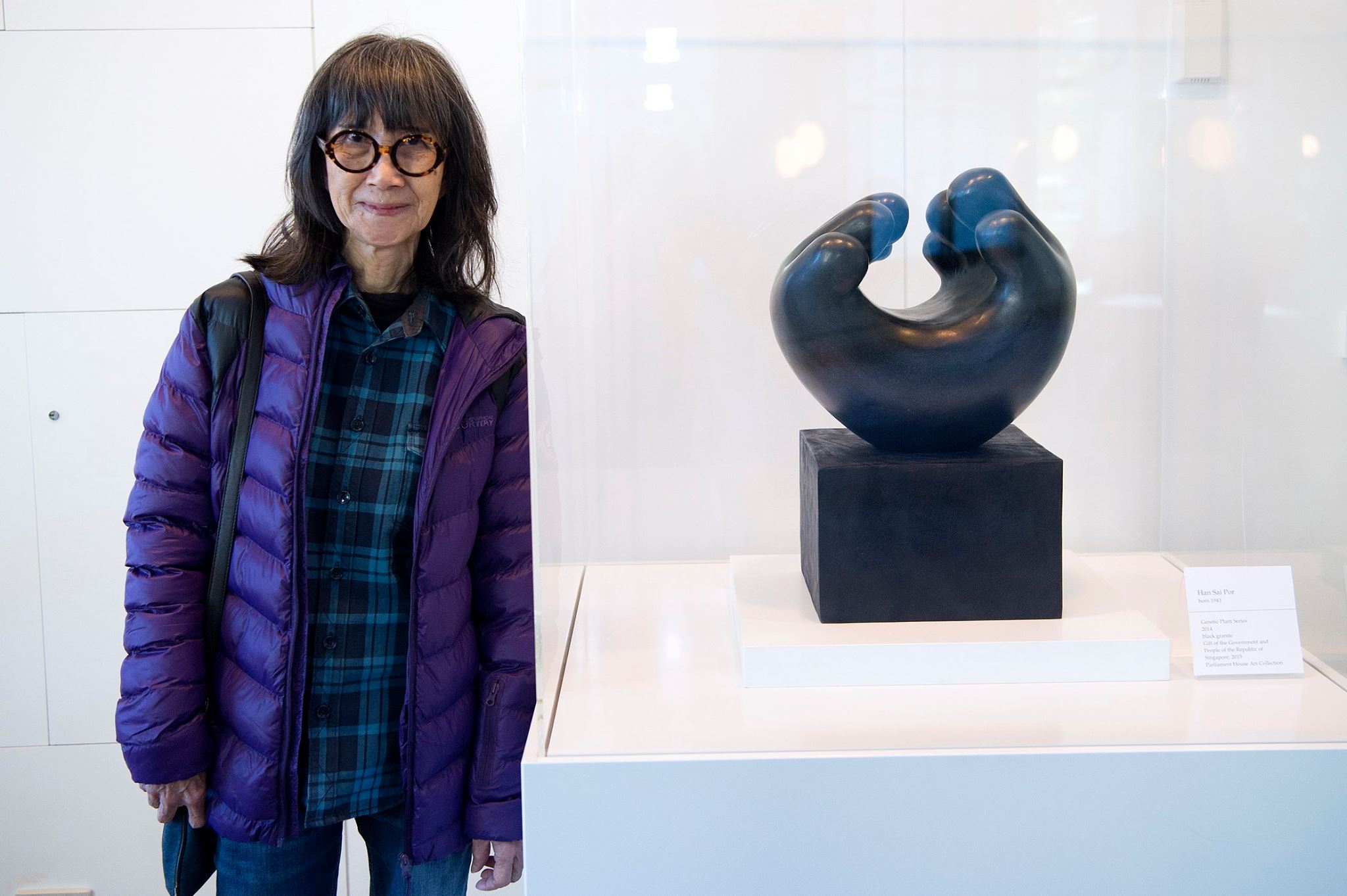
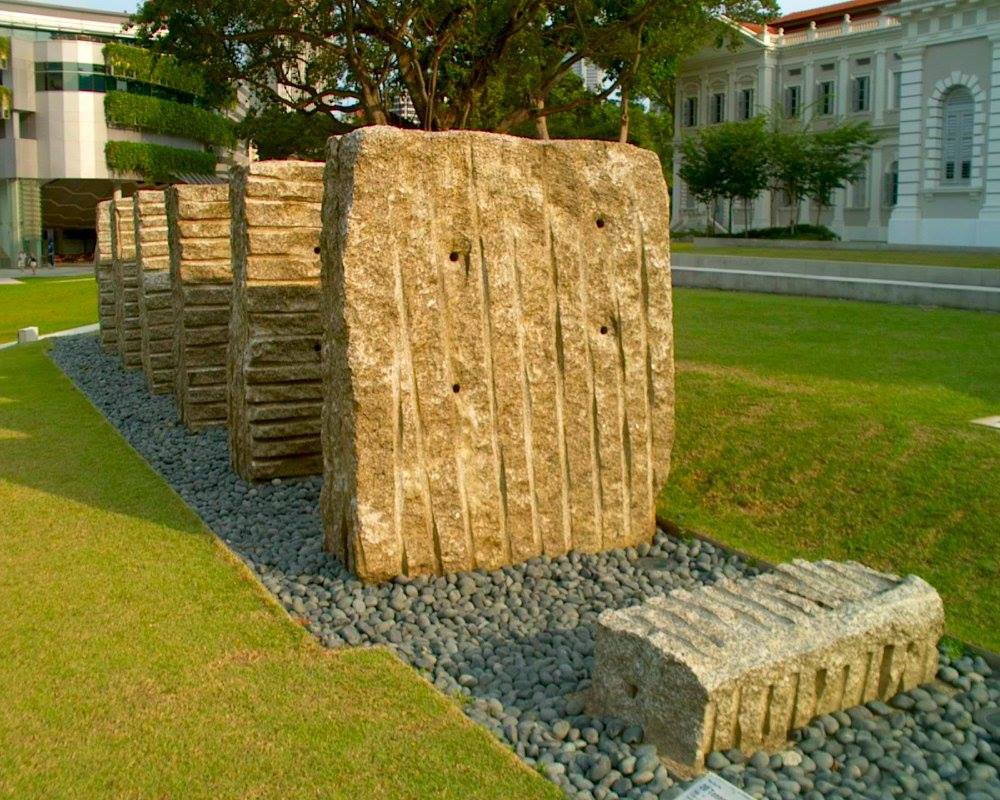
A full-time sculptor since 1996, Han is the founding president of Singapore's Sculpture Guild and remains the Honorary President. I of the nigh critically acclaimed modern sculptors in Asia, she is also the but dedicated stone sculptor in Singapore and has hewn outstanding pieces of fine art usually from granite and marble. I of her works 20 Tonnes – Physical Consequences (second moving-picture show) is notable because the monolithic blocks take been carved from a single cake of granite. She has also produced masterpieces using sandstone and trunks of tembusu copse.
Han'southward starting time solo exhibition Four Dimensions was held at Singapore's National Museum Art Gallery in 1993. She has since featured in international institutions, public spaces and private collections in countries such equally Malaysia, Republic of india, Nippon, the United kingdom of great britain and northern ireland and the US. She has been awarded numerous honours, including the Cultural Medallion for Fine art in 1995 and Leonardo Award for Sculpture at Chianciano Biennale in Italy in 2015.
Nam June Paik, Republic of korea
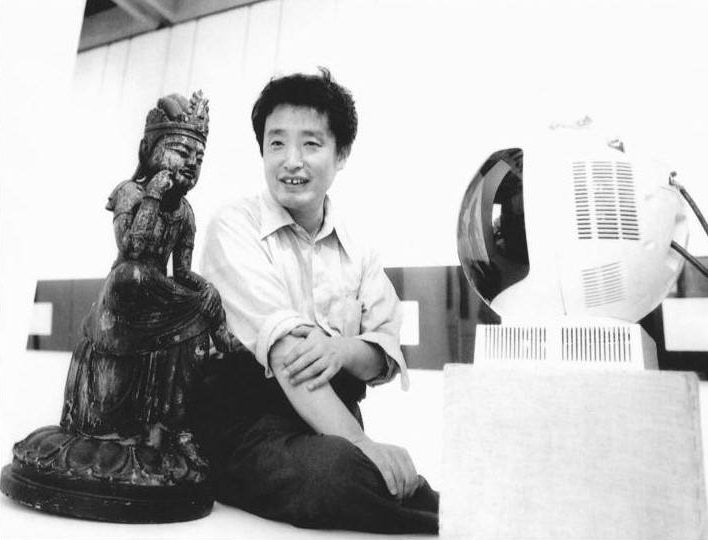
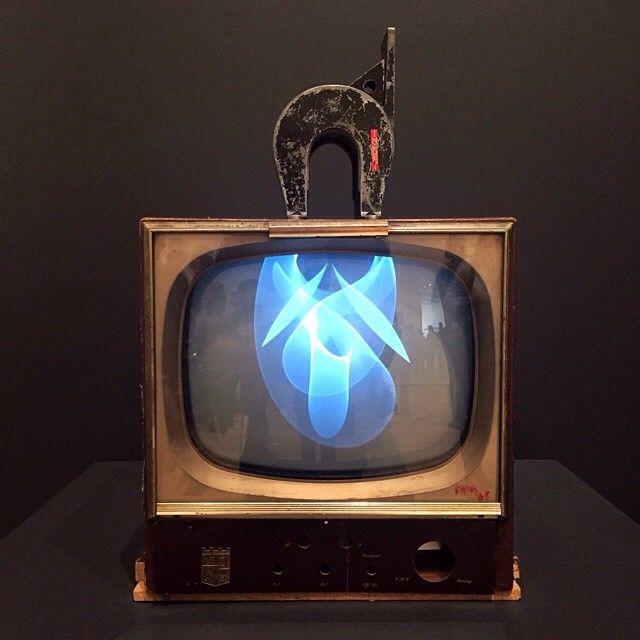
Originally a musician, information technology was Paik's first exhibition, Exposition of Music — Electronic Goggle box, in 1963 at Galerie Parnass in Wuppertal which launched his career as one of the most prominent Asian gimmicky artists of all time. At this show, Paik presented 13 idiot box sets laid on one side with their reception altered so that each gear up had a unlike display.
After moving to the United states of america in 1964, he created a remote-controlled robot called Robot K-456 — that played snippets of John F. Kennedy speeches — in collaboration with engineer Shuya Abe. Over the next two decades, Paik went on to garner appreciation for his television and video-based art.
His art found space in Musée d'art moderne de la Ville de Paris, National Museum of Contemporary Art in Seoul, Solomon R. Guggenheim Museum in New York and Venice Biennale amid other renowned fine art exhibitions. In 2007, a year later his death, Paik was honoured with the highest class in the Order of Cultural Merit by the S Korean regime.
Cai Guo-Qiang, China
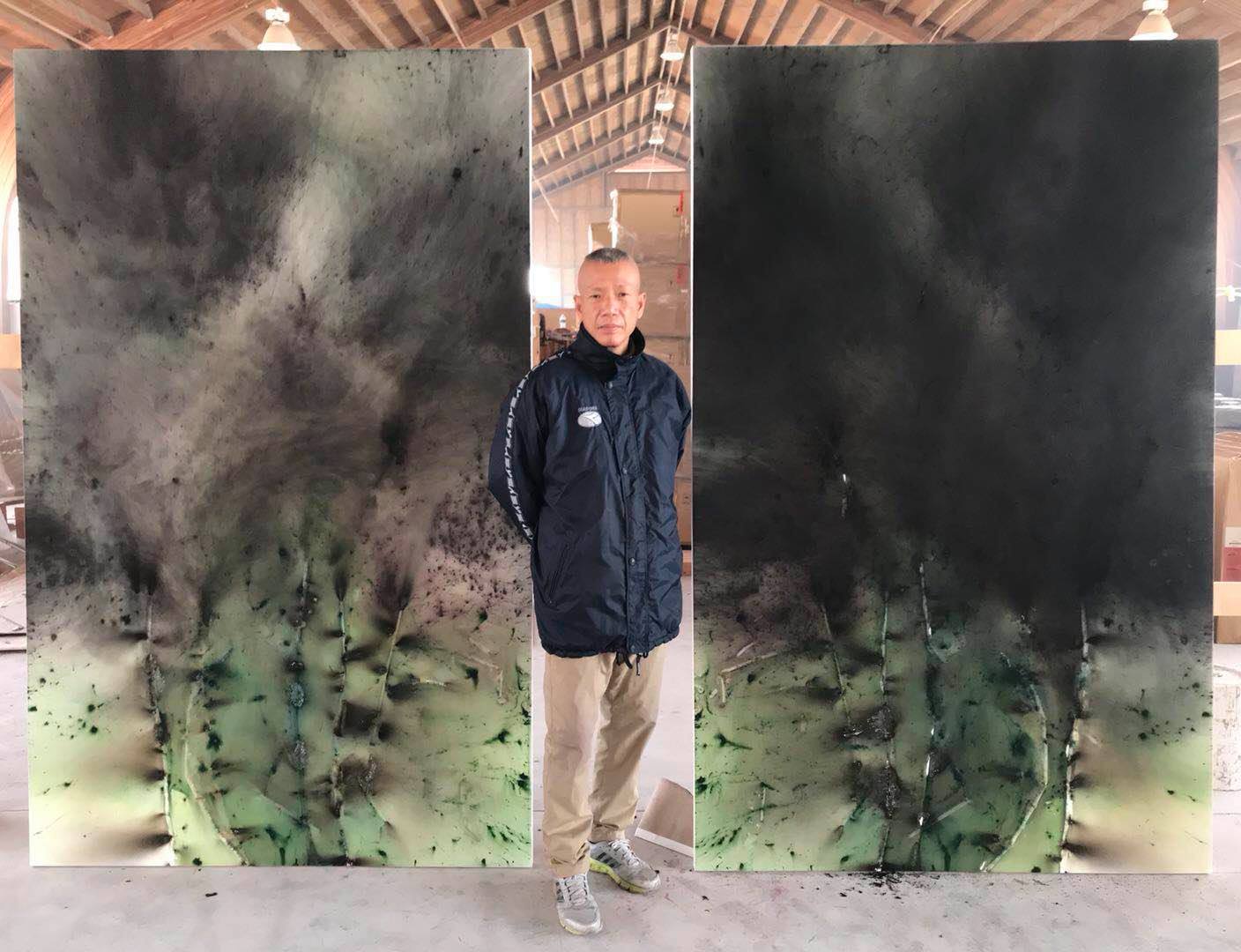
Cai was born in 1957 in Quanzhou City, Fujian Province. He studied stage design at the Shanghai Drama Institute from 1981 to 1985 and so left for Japan to acquire gunpowder techniques for ix years. In 1995, he moved to New York City where he has lived ever since. He was the first Chinese artist to have a solo prove at the Guggenheim Museum in New York Metropolis. In the 2008 exhibition, one of the installations was Inopportune: Stage Ane, where Cai suspended 9 cars from the ceiling and created an exploding effect with timed light displays.
In 2008, he also participated in the Beijing Olympics as the director of visual and special effects. His fireworks brandish — a series of 29 giant footprints, one for each Olympiad —was viewed by near a billion people. Awarded the Japan Art Association's Praemium Imperiale in 2012, he left the viewers astounded with a 12-minute issue titled Ane Night Stand at the annual Nuit Blanche celebration in Paris in 2013. The dazzling pyrotechnic display at midnight was an ode to dear and took place on Seine river between Musée du Louvre and Musée d'Orsay. It concluded with silverish fireworks spelling out the words "Sorry Gotta Go".
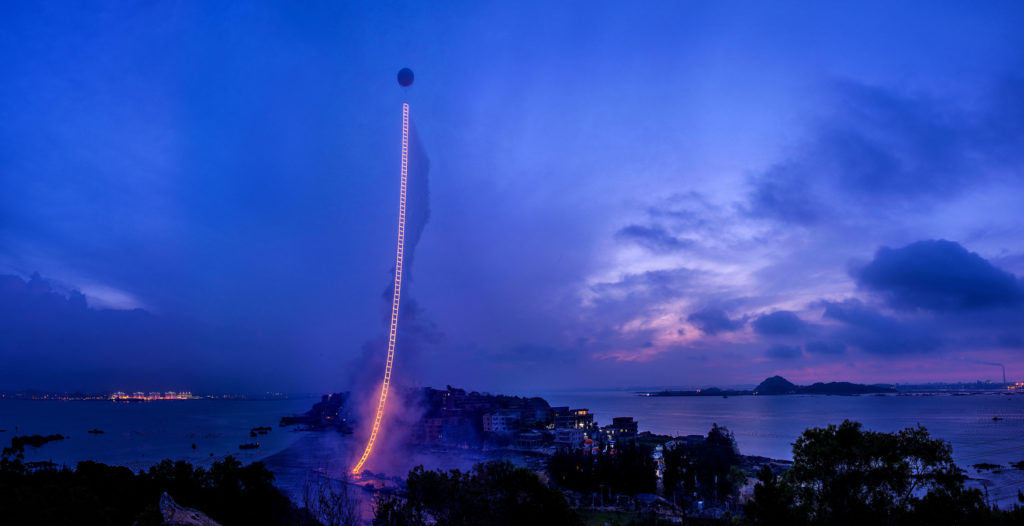
He went viral when a June 2015 video of a 1,650-foot concatenation of fireworks suspended by a helium balloon forming the shape of a ladder leaked on the cyberspace. This was Sky Ladder (2d picture), a work of art that Cai had tried to present earlier simply didn't get permission from the authorities. He went on to bear this out in secret at the Huiyu Island Harbour in Quanzhou. His life and artworks are the subject of the 2016 Netflix documentary Heaven Ladder: The Art of Cai Guo-Qiang which is rated an impressive 100 percent on Rotten Tomatoes.
(Main and featured image: fundacaoserralves/ Facebook)

Post a Comment for "Simple Chinese Art to Drawn by an Artist Asian Art Museum"